

The Bureau of Reclamation has launched a new prize competition aimed at improving the detection of hidden structural risks in embankment dams. The initiative, titled “Crack the Case,” seeks innovative techniques capable of identifying subsurface cracks before they trigger internal erosion, a major historical cause of dam failure.
The challenge offers up to $400,000 in total prizes and invites experts from a wide range of disciplines to propose new approaches for locating cracks buried deep within dam structures. According to the agency, these defects may measure only a few millimetres in width yet lie tens of feet beneath the surface, making them extremely difficult to detect using current geophysical tools.
“Detecting subsurface cracks before they become pathways for internal erosion is a persistent technical challenge in dam safety,” said Bureau of Reclamation Prize Competition Administrator Christine VanZomeren. “We're looking beyond conventional approaches and inviting fresh perspectives from geophysicists, sensing specialists, and problem-solvers from any field to help us find what current tools cannot.”
Through the competition, the Bureau is seeking solutions capable of identifying and locating subsurface cracks in embankment dams, including those with no visible surface expression. Proposed approaches must function effectively in clayey or silty embankments, and must also account for real-world operational constraints. These include variable soil conditions, limited access to dam structures, and potential interference from buried utilities and other infrastructure.
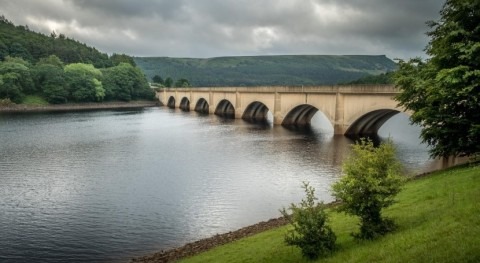
The Bureau of Reclamation leads a Dam Safety program for the 491 dams it manages. The agency operates more than 330 reservoirs, many of impounded by embankment dams, large earthen structures where undetected subsurface cracks can pose significant long-term safety risks.
The challenge will unfold in three phases. During the first stage, up to seven teams will each receive $30,000 for the most promising concept papers. Selected participants will advance to a second phase focused on prototype development and validation, with up to five teams awarded $20,000 each. In the final phase, solutions will be demonstrated under conditions representative of real embankment environments, with prizes of $60,000 for first place and $30,000 for second. The competition is open to individuals or teams aged 18 and older from around the world, provided participation is not restricted by U.S. federal sanctions.